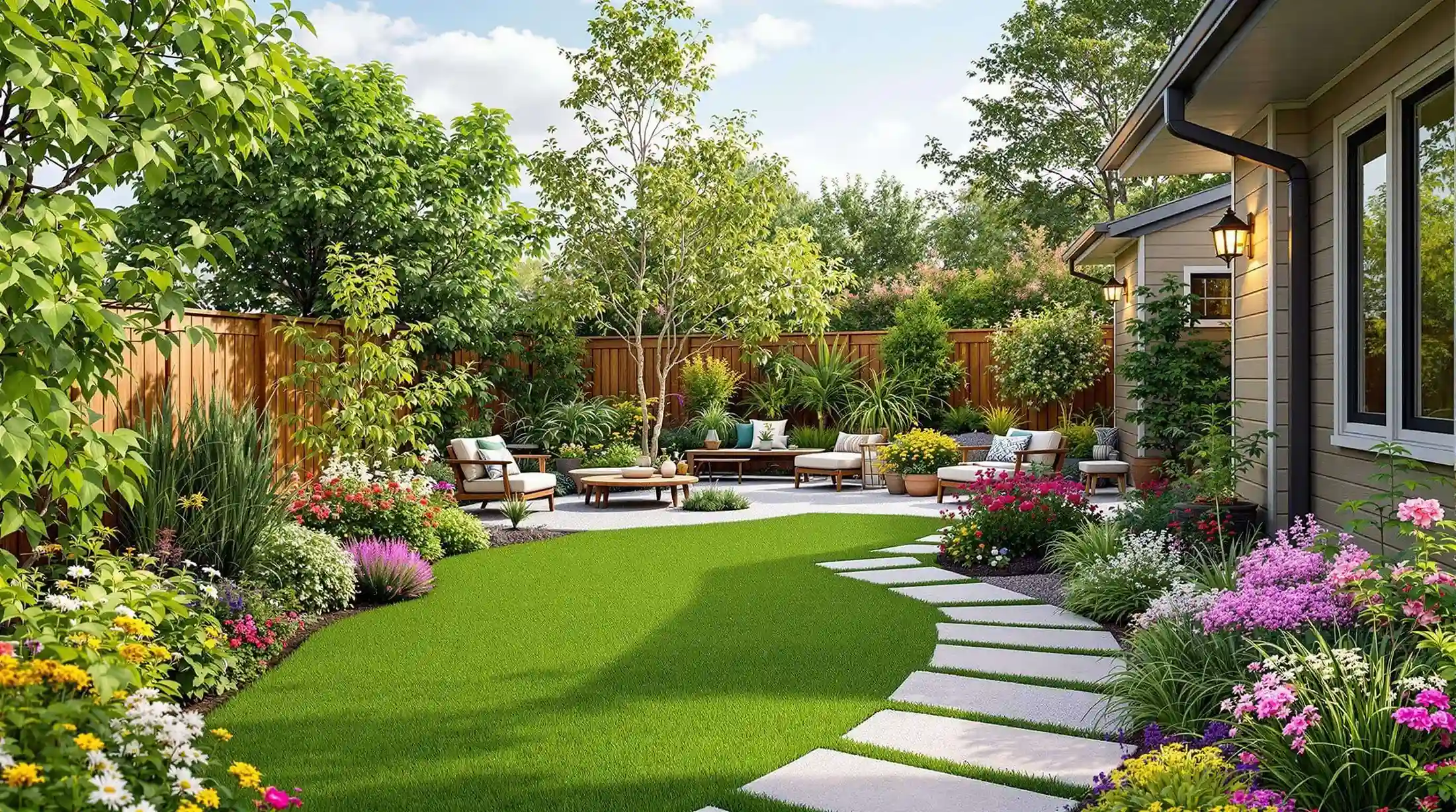
Backyard Design: Planning Systems, Use Patterns, and Long-Term Outdoor Performance
Backyard design is often framed as a matter of taste: a question of style, personal preference, or visual appeal. In practice, it is closer to a form of small-scale land planning, where private space absorbs pressures that are ecological, social, and operational at the same time. A backyard must function as drainage infrastructure, microclimate moderator, extension of domestic life, and long-term asset, all within the tight constraints of property boundaries and household resources.
Unlike public landscapes, backyards are shaped by informal decision-making. Choices are frequently incremental, influenced by seasonal needs, budget cycles, and changing family dynamics. This informality creates both flexibility and risk. Without a clear framework, improvements accumulate unevenly, producing spaces that are expensive to maintain, underused, or environmentally inefficient despite good intentions.
Backyard design also occupies a threshold between professional and amateur practice. Some projects involve direct collaboration with a landscape architect, while others rely on contractors, gardeners, or self-directed planning. The quality of outcomes varies less by budget than by clarity of purpose and understanding of long-term consequences. Small sites amplify mistakes as much as they reward thoughtful restraint.
This article approaches backyard design as a systems problem rather than a decorative exercise. It examines how private outdoor space evolves, how decisions compound over time, and how functional, ecological, and social goals can be aligned without oversimplification. The aim is to provide a durable reference that supports informed judgment rather than prescriptive formulas.
Understanding “landscape architect”
The involvement of a landscape architect in backyard design is often misunderstood. At a basic level, the role is assumed to be aesthetic: selecting plants, arranging paths, or defining outdoor rooms. This view captures only a fraction of professional responsibility. In reality, a landscape architect evaluates how a site functions across time, how water moves through it, how materials age, and how human use patterns shift.
From one perspective, the landscape architect acts as an integrator. Grading, drainage, planting, lighting, and structures are considered together rather than as isolated upgrades. This integration is especially valuable in small sites, where changes to one element quickly affect all others. A new patio alters runoff patterns; a tree canopy reshapes microclimate; a fence changes circulation and privacy.
Another perspective emphasizes risk management. Backyard projects frequently encounter hidden constraints: poor soil, outdated drainage, utility conflicts, or local code restrictions. A landscape architect identifies these early, reducing the likelihood of costly rework. The value here is not visual distinction but avoidance of failure.
Oversimplification occurs when professional input is deferred until late in the process, after major decisions are already fixed. In such cases, the landscape architect becomes a stylist rather than a planner, limiting their ability to influence performance. Effective backyard design requires early-stage thinking, even when implementation is phased.
Historical and Contextual Background of Backyard Spaces
Backyards as a cultural concept are relatively recent. In pre-industrial contexts, domestic land was productive: gardens for food, livestock enclosures, or service yards. The modern backyard emerged alongside suburbanization, where private outdoor space became a buffer between dwelling and street, and a symbol of leisure rather than necessity.
Postwar development patterns reinforced this model. Standardized lot sizes, zoning setbacks, and utility layouts created predictable backyard geometries. Design decisions focused on lawns and minimal planting, emphasizing ease of maintenance over ecological performance. Over time, these spaces accumulated additions—decks, sheds, play equipment—without comprehensive planning.
In recent decades, backyards have taken on new roles. Rising urban density has increased reliance on private outdoor space for recreation and socializing. Environmental awareness has reframed backyards as potential sites for stormwater management, habitat support, and temperature regulation. These shifts have expanded expectations without necessarily improving decision-making frameworks.
Understanding this evolution matters because it explains common mismatches between intention and outcome. Many backyards fail not due to lack of effort, but because inherited assumptions no longer align with current needs or environmental realities.
Conceptual Frameworks and Mental Models
Effective backyard design relies on mental models that help structure choices.
Program-First Thinking
This framework begins with use patterns: dining, play, gardening, quiet retreat. Spatial organization follows function. Its limitation lies in underestimating environmental constraints such as drainage or sun exposure.
Microclimate Analysis
Sun, wind, shade, and heat retention shape comfort more than visual style. Designing with microclimate in mind improves usability but requires site-specific observation over time.
Layered Systems
Hardscape, planting, water management, and utilities are treated as interdependent layers. This approach reduces conflict but increases upfront planning effort.
Incremental Phasing
Design anticipates staged implementation. Early decisions preserve flexibility for later changes. Poor phasing, however, can lock in inefficiencies.
Categories and Variations of Backyard Design
Backyards vary widely in intent and constraint.
Family-Oriented Backyards
Prioritize safety, durability, and flexible use. Trade-offs include reduced planting diversity.
Entertaining-Focused Spaces
Emphasize gathering areas, lighting, and circulation. Maintenance demands often increase.
Ecologically Driven Backyards
Focus on native planting, water infiltration, and habitat. Visual expectations may differ from conventional norms.
Minimalist or Low-Maintenance Yards
Reduce inputs through limited materials and planting. Risk lies in oversimplification that produces monotony or heat gain.
Productive Gardens
Incorporate food production. Require ongoing labor and seasonal planning.
| Category | Primary Goal | Key Trade-Off |
|---|---|---|
| Family | Safety & flexibility | Plant diversity |
| Entertaining | Social use | Maintenance |
| Ecological | Performance | Visual immediacy |
| Minimalist | Efficiency | Comfort variability |
| Productive | Yield | Labor input |
Decision logic should align category choice with household capacity and long-term commitment.
Real-World Backyard Scenarios
Small Urban Lot
Constraints include limited space, shade from adjacent buildings, and drainage issues. Overbuilding hardscape is a common failure mode, increasing heat and runoff.
Sloped Suburban Yard
Grading and erosion control dominate decisions. Ignoring soil stabilization leads to recurring repair costs.
Newly Built Home
Bare conditions allow comprehensive planning, but budget pressure often leads to deferred planting, altering original intent.
Multi-Generational Household
Conflicting use patterns require zoning within the yard. Lack of clear boundaries creates underused space.
Planning, Cost, and Resource Dynamics
Backyard projects involve more than visible expenses.
| Cost Component | Typical Range | Notes |
|---|---|---|
| Design | 5–15% of build | Varies by involvement |
| Construction | Highly variable | Materials, access |
| Planting | Moderate | Dependent on size |
| Annual Maintenance | 3–8% of install | Labor, replacements |
Opportunity cost is often ignored. Space dedicated to one function reduces capacity for others, and early misallocation is difficult to reverse.
Tools, Strategies, and Support Systems
-
Site measurement and observation
-
Soil testing
-
Sun and shade mapping
-
Phased implementation plans
-
Professional consultation
-
Maintenance planning tools
Each tool supports better decisions but cannot substitute for clear priorities.
Risk Landscape and Failure Modes
Common risks include drainage failure, plant mismatch, overbuilding, and maintenance fatigue. Risks compound when short-term fixes accumulate without a guiding framework.
Governance, Maintenance, and Long-Term Adaptation
Even private backyards require governance: who maintains what, when adjustments occur, and how decisions are revisited.
Key elements include:
-
Defined maintenance roles
-
Seasonal review cycles
-
Triggers for redesign or removal
Backyards that adapt gradually remain functional longer than those treated as static installations.
Measurement, Tracking, and Evaluation
Leading indicators include plant health, soil condition, and frequency of use. Lagging indicators include replacement costs and declining usability.
Documentation may involve simple logs, photos, or seasonal notes. The goal is awareness, not bureaucracy.
Common Misconceptions and Oversimplifications
-
Small yards are simple to design.
-
More features equal better use.
-
Low-maintenance means no maintenance.
-
Lawns are always the easiest option.
-
Professional input is only for large projects.
-
Initial appearance defines success.
Each misconception obscures long-term performance considerations.
Ethical and Contextual Considerations
Backyard design influences water use, biodiversity, and neighborhood character. Choices made at the household level aggregate into broader environmental impact. Responsibility lies in recognizing these cumulative effects without imposing unrealistic standards.