Garden Designer: Roles, Principles, Planning, and Long-Term Garden Systems
The role of a garden designer is often misunderstood as narrowly decorative, associated primarily with plant selection or surface-level styling. In practice, the discipline is far more exacting. A garden designer operates at the intersection of horticulture, spatial planning, human behavior, and long-term stewardship, translating abstract intentions into living systems that evolve over time. Unlike interior or architectural work, gardens do not stabilize after completion; they grow, decline, and respond to forces that cannot be fully controlled.
Garden design occupies a distinct position within the broader landscape professions. It is typically more intimate in scale than landscape architecture, yet more systemically complex than casual gardening. Decisions about soil preparation, plant communities, circulation, and microclimate carry cumulative consequences. Small misjudgments—plant spacing, water access, exposure—may not be visible immediately, but they surface months or years later, often when correction is most expensive.
Another defining feature of the garden designer’s work is proximity to daily life. Gardens are not background infrastructure; they are used, observed, and modified continuously by their owners. This closeness amplifies both success and failure. A well-designed garden becomes part of a household’s rhythm. A poorly designed one becomes a source of friction, ongoing cost, or neglect. The designer’s task, therefore, is not only to imagine form, but to anticipate habits, capacities, and change.
This article examines the garden designer as a systems thinker working at human scale. It traces the evolution of the role, clarifies common misconceptions, and explores how professional judgment is applied under real-world constraints. The intent is to provide a durable reference for understanding what garden design entails when practiced with rigor rather than assumption.
Understanding “backyard design”
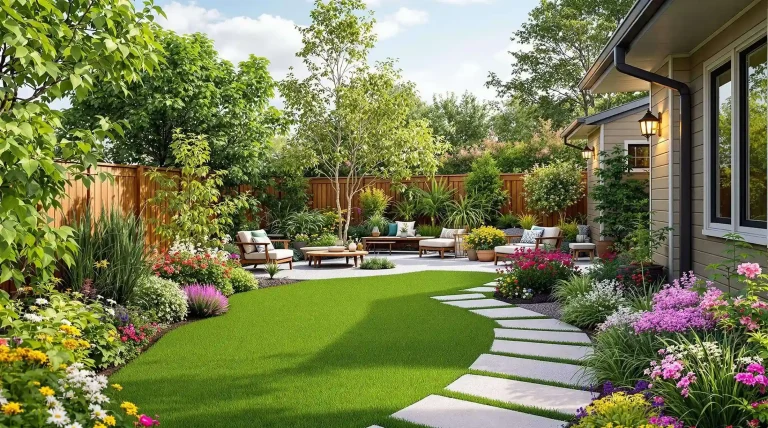
The concept of backyard design is frequently conflated with garden design, yet the two are not synonymous. Backyard design often refers to the overall organization of a private outdoor space, including hardscape, recreation areas, utilities, and circulation. Garden design, by contrast, focuses more precisely on the living components within that space and their spatial, ecological, and experiential relationships.
From one perspective, backyard design establishes the framework: where people move, gather, and rest; how water drains; how structures interface with open space. Within this framework, the garden designer defines the character and performance of planted areas. The distinction matters because problems arise when gardens are treated as decorative afterthoughts rather than integral systems embedded within the broader layout.
Another common misunderstanding is to treat backyard design as a single, one-time decision. In reality, both backyard design and garden design are iterative processes. Planting plans evolve as microclimates reveal themselves, and user behavior often diverges from initial assumptions. Effective garden designers anticipate this and design for adjustment rather than permanence.
Oversimplification carries risk. When garden design is reduced to plant lists or visual themes, issues such as soil health, water balance, and long-term maintenance are neglected. The result may appear successful in its first season, only to degrade steadily as underlying conditions assert themselves.
Historical and Systemic Context of Garden Design
Garden design has deep historical roots, shaped by culture, climate, and technology. Early domestic gardens were utilitarian, focused on food, medicine, and household needs. Aesthetic considerations existed, but they were secondary to survival and productivity. Over time, particularly in affluent societies, gardens became symbols of leisure, status, and control over nature.
The formal gardens of earlier centuries emphasized geometry, symmetry, and human dominance. These traditions influenced residential garden design well into the modern era, even as ecological understanding expanded. Lawns, hedges, and ornamental plantings became standardized features, often disconnected from local climate or soil conditions.
In the twentieth century, suburbanization further standardized garden patterns. Small private lots, predictable setbacks, and mass-produced plant materials encouraged formulaic solutions. Garden designers working within this context often faced tension between client expectations and ecological reality.
Contemporary garden design reflects a gradual shift toward performance and sustainability. Concerns about water use, biodiversity, and climate resilience have reintroduced systemic thinking. The modern garden designer must navigate inherited cultural preferences while adapting to environmental limits that are increasingly visible.
Conceptual Frameworks and Mental Models
Professional garden designers rely on mental frameworks to manage complexity at small scale.
Plant Community Logic
Plants are selected and arranged based on shared requirements rather than isolated traits. This improves resilience but limits ornamental variety.
Seasonal Continuity
Design considers visual and functional interest across seasons. The challenge lies in balancing peak moments with quieter periods.
Maintenance Capacity Alignment
Design decisions are matched to the owner’s realistic ability to maintain the garden. Overestimating capacity is a common failure.
Micro-Site Differentiation
Even small gardens contain varied conditions of sun, moisture, and exposure. Recognizing these differences improves performance but requires careful observation.
Categories and Variations of Garden Design Practice
Garden design varies widely depending on intent and context.
Ornamental Gardens
Prioritize visual composition and seasonal display. They often demand higher maintenance.
Ecological or Naturalistic Gardens
Emphasize native species and habitat value. Visual outcomes may challenge conventional expectations.
Productive Gardens
Integrate food production. They require consistent labor and planning.
Courtyard and Enclosed Gardens
Focus on spatial intimacy and microclimate control. Errors are magnified by enclosure.
Low-Intervention Gardens
Aim to minimize inputs. Success depends heavily on initial plant selection.
| Category | Primary Focus | Trade-Off |
|---|---|---|
| Ornamental | Visual impact | Labor intensity |
| Ecological | System performance | Aesthetic norms |
| Productive | Yield | Ongoing effort |
| Courtyard | Spatial quality | Limited flexibility |
| Low-intervention | Efficiency | Slower establishment |
Choosing a category involves aligning goals with time, resources, and tolerance for change.
Real-World Garden Design Scenarios
Urban Row House Garden
Limited light and soil volume constrain plant choice. Overplanting is a frequent mistake, leading to rapid decline.
Suburban Family Garden
Multiple uses compete for space. Lack of zoning results in underused planting areas.
Historic Property Garden
Preservation expectations limit material choices. Introducing modern performance features requires careful integration.
Rental Property Garden
Maintenance turnover drives conservative design. Failure often stems from assuming continuity that does not exist.
Planning, Cost, and Resource Dynamics
Garden design costs are often underestimated because living systems mask future expense.
| Cost Element | Typical Range | Notes |
|---|---|---|
| Design Fees | Modest to moderate | Depends on scope |
| Installation | Variable | Soil prep is key |
| Plant Replacement | Ongoing | Mortality expected |
| Maintenance | Annual | Scales with intensity |
Opportunity cost is significant. Space devoted to one function limits others, and reversal is rarely simple.
Tools, Strategies, and Support Systems
-
Soil analysis and amendment planning
-
Plant performance records
-
Seasonal observation logs
-
Phased planting strategies
-
Professional collaboration
-
Maintenance scheduling systems
Each tool improves outcomes but cannot replace informed judgment.
Risk Landscape and Failure Modes
Common risks include plant-environment mismatch, maintenance overload, and premature aesthetic judgment. Risks compound when early warnings—poor growth, water stress—are ignored in favor of cosmetic fixes.
Governance, Maintenance, and Long-Term Adaptation
Even private gardens require governance. Decisions about pruning, replacement, and change must be revisited regularly.
Effective structures include:
-
Clear maintenance responsibility
-
Seasonal review points
-
Criteria for intervention or redesign
Gardens that adapt incrementally remain viable longer than those treated as finished objects.
Measurement, Tracking, and Evaluation
Leading indicators include plant vigor, soil condition, and frequency of use. Lagging indicators include replacement costs and declining engagement.
Documentation may be informal—notes, photos, calendars—but consistency matters more than format.
Common Misconceptions and Oversimplifications
-
Garden design is primarily about plants.
-
Good gardens are low effort by default.
-
Visual maturity is immediate.
-
Native plants require no care.
-
Small gardens are simple.
-
Installation marks completion.
Each misconception overlooks time, systems, or human behavior.
Ethical and Contextual Considerations
Garden designers influence water use, chemical inputs, and local biodiversity. At aggregate scale, private gardens shape neighborhood ecology. Ethical practice involves acknowledging these effects without imposing unrealistic standards on clients.
Conclusion
The garden designer operates within a discipline defined by living systems, human habits, and gradual change. Successful practice depends less on stylistic certainty than on patience, observation, and alignment between intention and capacity. When garden design is approached as a long-term relationship rather than a one-time project, it becomes resilient, adaptable, and genuinely integrated into daily life.