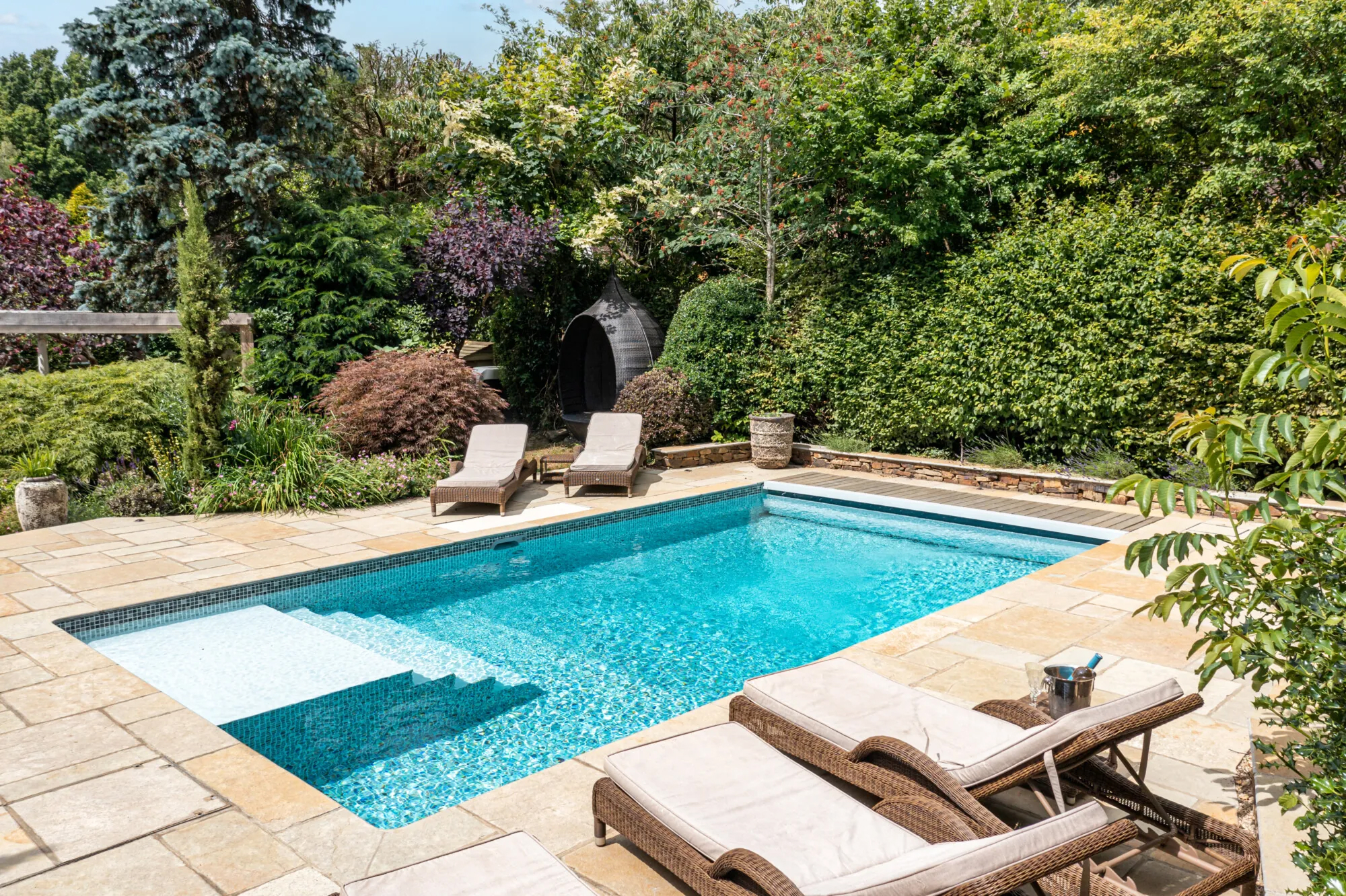
Pool: A Comprehensive Guide to Design, Function, Risk, and Long-Term Management
A pool is often treated as a simple amenity—water contained by structure, intended for recreation, training, or aesthetic value. That simplification obscures how layered the concept actually is. A pool is a designed system: hydraulic, architectural, chemical, social, and regulatory, all operating at once. Its success or failure rarely hinges on a single decision, but on how dozens of small, often invisible choices interact over time.
Across cultures and eras, pools have carried different meanings. They have been sites of ritual cleansing, athletic discipline, leisure, status signaling, public health intervention, and urban heat mitigation. The same object—a basin of water—can function as private refuge or public infrastructure, depending on context. Treating all pools as interchangeable leads to poor planning, misaligned budgets, and long-term maintenance burdens that surface years after construction.
Modern discussions tend to polarize around aesthetics versus cost, or luxury versus necessity. In practice, pools exist on a continuum of use cases and constraints. Climate, density, regulation, user behavior, and operational capacity matter as much as design intent. An editorially serious treatment must account for these forces without collapsing them into a checklist.
This article approaches the pool as a system rather than a feature. It examines historical roots, conceptual frameworks, categories and trade-offs, real-world decision scenarios, cost dynamics, risks, governance, and long-term adaptation. The goal is not to persuade, but to clarify—to provide a durable reference for readers who want to understand what a pool actually entails when considered in full.
Understanding “swimming pool”
The term swimming pool is commonly used as if it denotes a single, stable concept. In reality, it functions as an umbrella label covering multiple design philosophies, usage patterns, and operational models. At a minimum, it refers to an engineered body of water intended for human entry. Beyond that, its meaning diverges quickly.
From a design perspective, a swimming pool is a controlled aquatic environment. Water depth, circulation patterns, entry points, and finishes are calibrated to shape user behavior and safety. From an engineering standpoint, it is a closed-loop hydraulic system with inputs (water, energy, chemicals) and outputs (evaporation, splash-out, waste). From a regulatory standpoint, it is a risk-bearing facility subject to codes, inspections, and liability regimes.
Misunderstandings arise when one perspective dominates. Treating a swimming pool purely as an architectural feature can lead to underpowered filtration or inaccessible layouts. Viewing it only as mechanical infrastructure can produce spaces that meet code but fail socially. Oversimplification is particularly risky in shared or public contexts, where user diversity magnifies design flaws.
A more accurate understanding accepts that a swimming pool is not static. Its function evolves with user demographics, climate patterns, and maintenance capacity. The same pool can shift from recreational to therapeutic use, or from private leisure to semi-public asset, without any physical change—only a contextual one.
Deep Contextual Background
Pools predate modern recreation by thousands of years. Archaeological evidence points to constructed water basins in ancient South Asia and the Mediterranean, often associated with ritual, governance, or elite privilege. These early pools were less about swimming as sport and more about controlled access to water—an expression of power and order.
In ancient Rome, public baths transformed the pool into civic infrastructure. Large-scale engineering enabled heated water, complex circulation, and mass access. Pools became social equalizers, but also instruments of state presence. Their decline mirrored the collapse of centralized maintenance systems rather than a loss of cultural interest.
The modern resurgence of pools is tied to industrialization and public health. In the nineteenth and early twentieth centuries, urban pools were introduced to combat disease, teach swimming skills, and provide relief from overcrowded housing. Over time, private pools proliferated alongside suburbanization, reframing the pool as a domestic luxury.
Contemporary pools sit at the intersection of these histories. They retain traces of ritual, health, and status while being shaped by new pressures: water scarcity, energy costs, liability law, and changing leisure habits. Understanding this lineage helps explain why pools provoke strong opinions—they have never been neutral objects.
Conceptual Frameworks and Mental Models
1. Pool as System
This framework treats the pool as an interdependent set of components: structure, water chemistry, circulation, users, and governance. A failure in one area propagates. Its limitation is complexity; it can obscure simple fixes by overemphasizing interconnections.
2. Pool as Environment
Here, the pool is a micro-ecosystem shaped by temperature, light, and biological load. This lens is useful for health and comfort but less effective for budgeting or compliance decisions.
3. Pool as Asset
In this model, the pool is evaluated in terms of capital investment, depreciation, and return—financial or social. It clarifies long-term costs but risks undervaluing non-quantifiable benefits.
4. Pool as Risk Surface
This perspective centers on safety, liability, and failure modes. It is essential for public facilities yet can lead to overly defensive design if used alone.
Each framework reveals different truths. Effective planning involves switching between them rather than committing to one.
Key Categories and Variations
Pools can be categorized in many ways. The following distinctions are operationally meaningful.
Primary Categories
-
Residential private pools
-
Residential shared (HOA or apartment) pools
-
Public municipal pools
-
Commercial/hospitality pools
-
Therapeutic and rehabilitation pools
-
Competitive training pools
-
Natural or bio-filtered pools
Trade-Off Comparison
| Category | Primary Benefit | Key Constraint | Typical Complexity |
|---|---|---|---|
| Private residential | Control and privacy | High per-user cost | Low–Medium |
| Shared residential | Cost sharing | Governance friction | Medium |
| Public municipal | Broad access | Regulatory burden | High |
| Hospitality | Revenue support | User turnover | Medium–High |
| Therapeutic | Health outcomes | Specialized standards | High |
| Competitive | Performance optimization | Narrow use case | High |
| Natural | Low chemical use | Land and climate limits | Medium |
Decision logic should start with usage intensity and governance capacity, not aesthetics. Many failures occur when a pool is built for one category but operated as another.
Detailed Real-World Scenarios
Scenario 1: Urban Apartment Complex
Constraints include limited space, high user turnover, and noise regulations. A visually striking pool may succeed initially but fail under sustained load if filtration and access control are underspecified.
Scenario 2: Small Municipality
Budget cycles and staffing limits dominate. Seasonal operation reduces cost but introduces start-up risks each year, including equipment failure after dormancy.
Scenario 3: Rehabilitation Center
Water temperature and accessibility are non-negotiable. Attempting to combine therapeutic and recreational use often leads to compromised outcomes for both.
Scenario 4: Boutique Hotel
The pool functions as brand expression. Underestimating maintenance disrupts guest experience and erodes reputation faster than many other amenities.
Scenario 5: Private Residence in Arid Climate
Evaporation loss and water restrictions redefine feasibility. Design choices must anticipate regulatory tightening rather than current allowances.
Each scenario illustrates how second-order effects—staffing, regulation, user behavior—shape outcomes more than initial design intent.
Planning, Cost, and Resource Dynamics
Costs extend beyond construction. They unfold over time and vary widely.
| Cost Component | Typical Range (Annualized) | Variability Drivers |
|---|---|---|
| Construction amortization | Wide | Materials, scale |
| Energy | Moderate–High | Climate, heating |
| Water | Low–Moderate | Evaporation, regulation |
| Chemicals | Low–Moderate | Usage intensity |
| Labor | Moderate | Automation level |
| Compliance | Variable | Jurisdiction |
Opportunity cost is often ignored. Space devoted to a pool cannot serve other functions, and management attention is finite.
Tools, Strategies, and Support Systems
-
Automated chemical monitoring (reduces labor, requires calibration)
-
Variable-speed pumps (energy savings, higher upfront cost)
-
Pool covers (evaporation control, operational discipline required)
-
Access control systems (liability reduction, user friction)
-
Preventive maintenance schedules (cost smoothing, requires data)
-
Staff training protocols (risk reduction, turnover-sensitive)
-
External audits (objectivity, added expense)
No tool eliminates the need for judgment; each shifts where effort is applied.
Risk Landscape and Failure Modes
Risks cluster into categories:
-
Physical: slips, structural failure
-
Chemical: imbalances, contamination
-
Operational: staffing gaps, deferred maintenance
-
Regulatory: non-compliance, fines
-
Reputational: incidents, closures
Compounding occurs when small lapses align—for example, minor chemical drift combined with high user load and inexperienced staff.
Governance, Maintenance, and Long-Term Adaptation
Effective governance relies on clear ownership and review cycles. A layered checklist helps:
-
Daily: visual inspection, basic readings
-
Weekly: equipment checks, documentation review
-
Monthly: trend analysis, minor adjustments
-
Annually: comprehensive audit, capital planning
Adaptation triggers include regulation changes, usage shifts, and climate anomalies. Ignoring them leads to sudden, expensive corrections.
Measurement, Tracking, and Evaluation
Leading indicators include chemical stability and equipment runtime anomalies. Lagging indicators include incidents and closures. Qualitative signals—user complaints, staff feedback—often surface problems before metrics do.
Documentation examples:
-
Incident logs
-
Maintenance records
-
Energy consumption reports
-
Inspection summaries
Together, they form an institutional memory that outlasts individual staff.
Common Misconceptions and Oversimplifications
-
“Bigger pools are always better.” Scale increases risk and cost.
-
“Automation removes the need for expertise.” It changes, not eliminates, skill requirements.
-
“Pools are passive assets.” They demand active management.
-
“Compliance equals safety.” Minimum standards lag best practice.
-
“Private pools are simple.” Complexity is hidden, not absent.
-
“Natural pools are maintenance-free.” They trade chemicals for ecology.
-
“Design determines success.” Operation often matters more.
Ethical, Practical, and Contextual Considerations
Water use ethics are increasingly salient. In regions facing scarcity, the legitimacy of maintaining a swimming pool depends on efficiency, transparency, and alternative benefits such as community access or heat mitigation. Accessibility and inclusion also matter; design choices signal who is welcome and who is excluded.