Landscape Architect: Roles, Systems, Risks, and Long-Term Design Thinking
The Scope of the Landscape Architect’s Role
The profession of the landscape architect operates in a space where physical land, living systems, and human intention intersect. Rather than functioning as a purely artistic discipline, it requires judgment under uncertainty and an ability to synthesize ecological processes with social use. In practice, the work extends beyond visual composition and into long-term performance, regulation, and stewardship.
Moreover, landscape architecture differs from many built-environment professions because its primary medium is not static. Soils shift, vegetation grows and fails, and water moves according to cycles that rarely align with ownership boundaries. As a result, decisions made during early planning stages often produce consequences decades later.
Time, Uncertainty, and Professional Responsibility
Unlike architectural interiors or product design, landscapes continue to change long after construction ends. For this reason, landscape architects must anticipate change rather than resist it. They evaluate not only how a site will appear at completion, but also how it will perform under stress, neglect, or evolving patterns of use.
However, this temporal exposure also introduces professional risk. Small compromises—whether driven by budget, schedule, or politics—can accumulate over time. Consequently, the discipline places a premium on foresight, restraint, and the ability to communicate trade-offs clearly.
Governance, Power, and Land-Based Decision-Making
In addition to environmental complexity, landscape architects operate within layered systems of governance. Zoning codes, environmental regulations, procurement rules, and stakeholder interests all shape what can be built and how it will be maintained. Therefore, the profession frequently mediates between private objectives and public consequences.
Taken together, these conditions position the landscape architect not as a stylist, but as a systems professional. The sections that follow examine this role in depth, tracing its historical evolution, conceptual frameworks, and real-world decision logic.
Understanding “landscape design”
The phrase “landscape design” is widely used, yet rarely examined with precision. In its most reductive sense, it is often treated as the arrangement of outdoor elements—plants, paths, water features—into an aesthetically pleasing composition. This interpretation dominates popular media and small-scale residential work, where visual outcome is the primary metric of success.
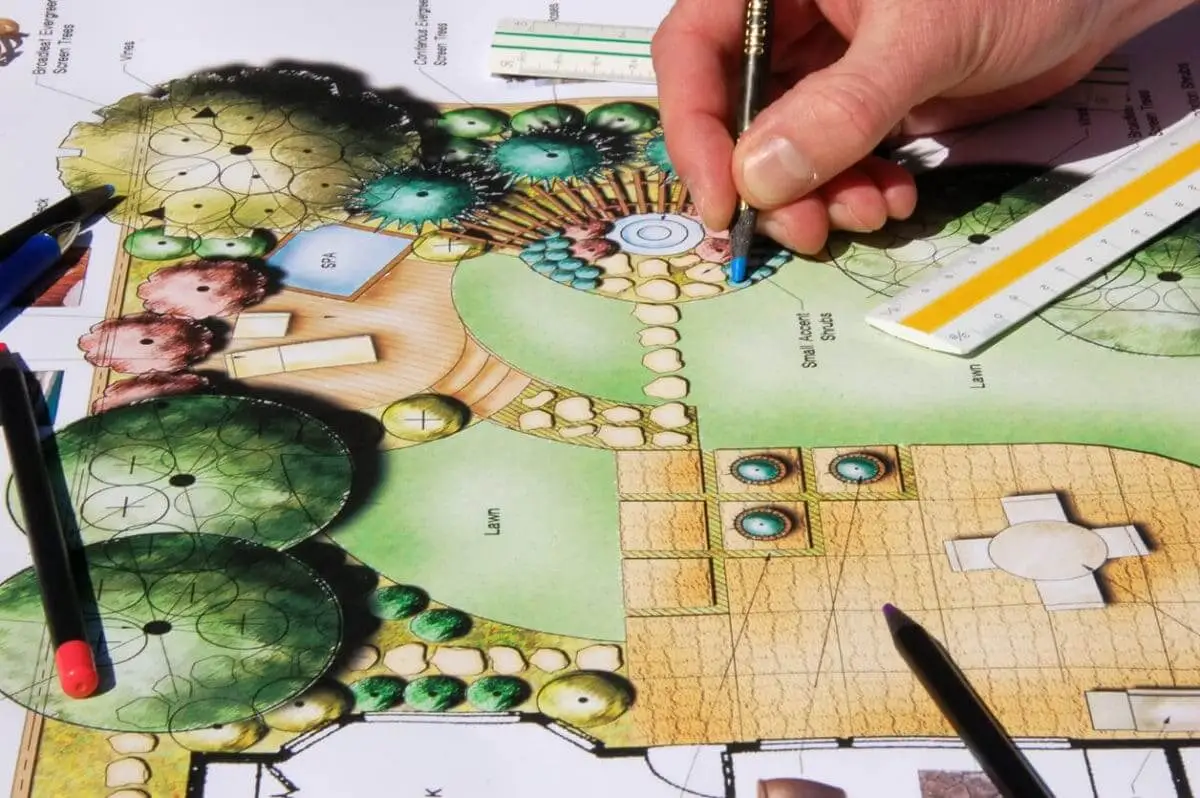
Within professional landscape architecture, however, landscape design functions as a decision-making process rather than a stylistic category. It encompasses spatial organization, ecological performance, regulatory compliance, constructability, and long-term maintenance viability. Drawings and renderings are not ends in themselves; they are tools for coordinating grading, drainage, circulation, and planting systems that must operate together over time.
A frequent misunderstanding is the assumption that landscape design sits downstream of architecture or engineering. In practice, it often operates in parallel or upstream, influencing building placement, infrastructure alignment, and site feasibility. When reduced to surface treatment, its capacity to manage risk and performance is lost, leading to projects that look resolved but function poorly.
Oversimplification also creates unrealistic expectations. Clients may expect immediate maturity, minimal maintenance, or ecological benefits without trade-offs. Competent landscape design involves making these trade-offs explicit, not obscuring them behind visual coherence.
Historical and Systemic Background
Landscape architecture emerged as a distinct profession during periods of rapid industrialization and urbanization. Early large-scale parks and parkway systems were responses to overcrowding, pollution, and public health concerns. These projects were as much social infrastructure as they were aesthetic landscapes, reflecting contemporary ideas about order, morality, and access to nature.
As the discipline matured, its scope expanded beyond ornamental grounds to include regional planning, environmental conservation, and infrastructure integration. The mid-twentieth century introduced ecological thinking into the profession, reframing landscapes as dynamic systems rather than static scenery. Concepts such as watershed management, habitat connectivity, and land suitability analysis began to influence practice.
In recent decades, climate change, urban growth, and biodiversity loss have further altered professional priorities. Landscape architects are increasingly engaged in flood mitigation, coastal adaptation, heat reduction, and post-industrial land remediation. These roles demand fluency in data, modeling, and policy, shifting the profession closer to long-term risk management.
Despite this evolution, tensions persist between image-driven approaches and performance-based strategies. The most effective contemporary practice tends to integrate both, recognizing that social acceptance and ecological function are interdependent rather than opposed.
Conceptual Frameworks and Mental Models
Landscape architects rely on conceptual frameworks to manage complexity. These frameworks guide analysis and decision-making but do not function as rigid formulas.
Systems Thinking
This approach treats the site as part of interconnected ecological, social, and infrastructural systems. Changes are evaluated for secondary and tertiary effects. Its limitation lies in uncertainty; not all interactions can be modeled accurately.
Temporal Succession
Design decisions are evaluated across time, accounting for growth, decay, and replacement. This framework challenges expectations of instant completion and requires careful communication with stakeholders.
Carrying Capacity
This model assesses how much use a landscape can sustain without degradation. It informs material choices and spatial programming but can be undermined by unpredictable human behavior.
Risk-Based Prioritization
Here, decisions are weighted by potential failure impact—flooding, erosion, safety. While effective for resilience, overuse can lead to conservative outcomes with limited experiential quality.
Categories and Variations of Practice
Landscape architecture encompasses multiple practice areas, each with distinct priorities and constraints.
Residential Practice
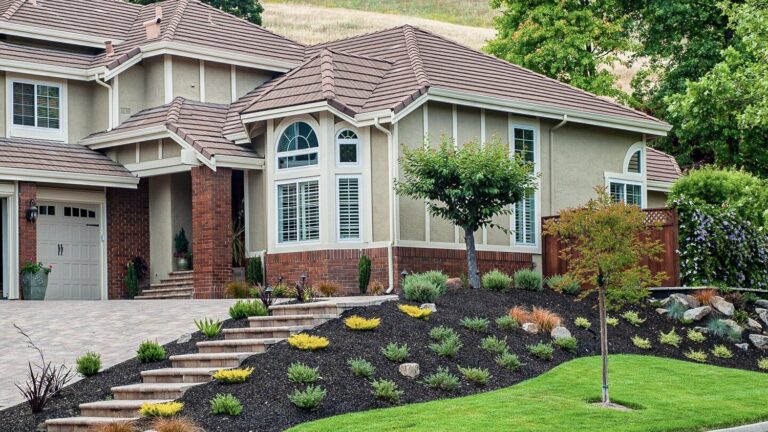
Often characterized by high aesthetic control and client involvement. Ecological scope is limited, and maintenance expectations are frequently underestimated.
Public Realm and Civic Space
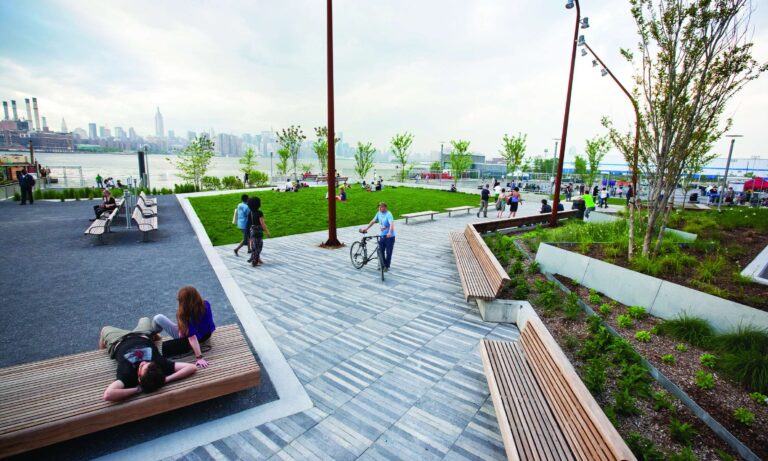
Includes parks, plazas, and streetscapes. These projects face heavy use, liability concerns, and complex stakeholder processes.
Environmental Restoration
Focused on repairing degraded ecosystems. Success is measured over long timeframes, often with subtle visual change.
Institutional and Campus Work
Balances identity, circulation, and phased growth. Governance structures are complex but relatively stable.
Infrastructure-Related Landscapes
Integrated with transportation and utility systems. Engineering constraints dominate design decisions.
| Practice Type | Primary Driver | Key Trade-Off |
|---|---|---|
| Residential | Visual outcome | Maintenance realism |
| Public Realm | Social use | Wear and liability |
| Restoration | Ecological function | Visual immediacy |
| Infrastructure | Risk mitigation | Experiential richness |
Decision-making involves aligning project type with budget tolerance, regulatory context, and long-term stewardship capacity.
Real-World Scenarios and Decision Dynamics
Floodplain Urban Park
Design must accept periodic inundation. Over-programming flood-prone areas is a common failure mode, leading to repeated damage and public frustration.
Corporate Campus Development
Brand identity competes with stormwater and circulation requirements. Second-order effects often include increased operational complexity.
Brownfield Redevelopment
Contaminated soils introduce regulatory and liability constraints. Ignoring long-term monitoring can undermine remediation efforts.
Coastal Adaptation Project
Sea-level projections conflict with current land values. Rigid solutions risk premature obsolescence under accelerating change.
Planning, Cost, and Resource Considerations
Landscape architecture costs extend beyond construction. They include design services, permitting, maintenance, and opportunity costs related to land use decisions.
| Cost Component | Typical Range | Variability Factors |
|---|---|---|
| Design Fees | 8–20% of construction | Complexity, approvals |
| Construction | Highly variable | Materials, site prep |
| Annual Maintenance | 5–10% of install | Use intensity |
| Lifecycle Renewal | Long-term | Climate, wear |
Opportunity cost—what alternative uses or services are foregone—is frequently overlooked but central to responsible planning.
Tools, Strategies, and Support Systems
-
Site and environmental analysis
-
Hydrologic and soil modeling
-
Plant performance data
-
Regulatory review processes
-
Interdisciplinary coordination
-
Phasing and adaptive management plans
Each tool carries limits imposed by data quality, institutional silos, or budget constraints.
Risk Landscape and Failure Modes
Risks compound across project phases. Early analytical errors propagate into construction and maintenance. Common categories include ecological mismatch, regulatory non-compliance, budget erosion, and stewardship failure. Compounding risk occurs when multiple minor compromises align, producing systemic underperformance rather than isolated issues.
Governance, Maintenance, and Long-Term Adaptation
Long-term performance depends on governance as much as design quality. Clear ownership, funding mechanisms, and review cycles are essential.
Layered considerations include:
-
Defined maintenance responsibility
-
Alignment between design intent and skill capacity
-
Scheduled performance reviews
-
Triggers for adaptive intervention
Landscapes that cannot adjust incrementally tend to fail abruptly.
Measurement, Tracking, and Evaluation
Leading indicators include soil health, plant vigor, and user behavior patterns. Lagging indicators include replacement rates and escalating costs.
Documentation methods may include maintenance logs, seasonal photographs, and ecological monitoring summaries. Quantitative data gains meaning only when paired with qualitative observation.
Common Misconceptions and Oversimplifications
-
Landscape architects only select plants.
-
Good design eliminates maintenance.
-
Visual appeal equals functional success.
-
Codes guarantee performance.
-
Naturalistic landscapes require less care.
-
Installation defines completion.
Each misconception ignores the systemic and temporal nature of the work.
Ethical and Contextual Considerations
Landscape architects influence access to space, environmental risk distribution, and ecological outcomes. Decisions about resilience investment, public access, and restoration priorities carry ethical weight. Professional responsibility includes recognizing whose interests are served and whose risks are deferred.
Conclusion
The landscape architect works within a discipline defined by uncertainty, time, and interdependence. Success is not measured solely by visual coherence but by the ability to align ecological processes, human use, governance structures, and long-term stewardship. The most durable work accepts limits, plans for change, and treats landscape design not as a finished object, but as an evolving relationship between people and land.