Swim Spas: Structure, Performance, Costs, Risks, and Long-Term Use
Swim spas occupy an ambiguous space in the aquatic landscape. They are often described by what they are not: not quite a pool, not merely a hot tub, not fully recreational, not purely therapeutic. This ambiguity is not a weakness of the category; it is the result of layered design intent. Swim spas emerged to solve a specific set of constraints—limited space, year-round usability, multi-purpose function—but over time they accumulated expectations borrowed from adjacent systems that were never designed to coexist cleanly.
At a structural level, swim spas compress several functions into a compact vessel: resistance-based swimming, hydrotherapy, temperature control, and often social seating. Each function carries its own technical and operational requirements. The challenge lies not in achieving any single one of them, but in managing the trade-offs created when they share the same envelope of water, energy, and user behavior.
Public discussion tends to flatten these trade-offs into consumer-friendly comparisons. Swim spas are framed as “small pools” or “large hot tubs,” depending on the speaker’s bias. Both comparisons miss the point. A swim spa is a distinct system with its own performance envelope, maintenance profile, and governance demands. Treating it as a substitute rather than a category leads to mismatched expectations and, eventually, dissatisfaction.
This article approaches swim spas as engineered hybrids. It examines their historical emergence, conceptual logic, variations, cost structures, risks, and long-term adaptation challenges. The objective is not to rank them against pools or spas, but to understand what they are designed to do, what they are structurally constrained from doing, and how those boundaries shape real-world outcomes.
Understanding “swim spa”
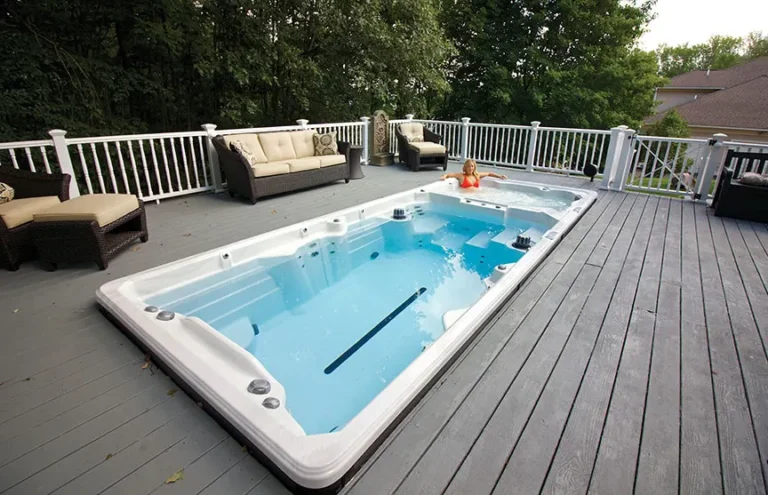
The term swim spa refers to a self-contained aquatic system designed to allow stationary swimming through the use of generated water current, typically combined with hydrotherapy seating. From a functional standpoint, it is neither a scaled-down pool nor an oversized spa, but a purpose-built environment optimized for resistance movement in confined space.
From an engineering perspective, a swim spa is defined by its propulsion system. Pumps, jets, or turbines generate a directional current intended to simulate forward swimming. The quality of this current—laminar versus turbulent, adjustable versus fixed—largely determines usability. This feature alone distinguishes the swim spa from other aquatic vessels, yet it is often treated as an accessory rather than the core design driver.
Misunderstandings commonly arise around versatility. Marketing language suggests seamless transitions between fitness, relaxation, and recreation. In practice, these modes compete for water temperature, jet configuration, and user positioning. A swim spa can support multiple use cases, but rarely optimizes all simultaneously. Oversimplification obscures the need for prioritization.
Another point of confusion involves permanence. Many swim spas are portable or semi-portable, leading to assumptions about simplicity. While installation may be less invasive than an in-ground pool, operational complexity remains high. Electrical load, water chemistry, and mechanical maintenance do not scale down proportionally with size.
Deep Contextual Background
Swim spas emerged in the late twentieth century at the intersection of three trends: rising interest in home fitness, advances in compact pump technology, and increasing land constraints in residential development. Early iterations were crude by modern standards, producing uneven currents and limited adjustability. Adoption was niche, driven primarily by athletes and rehabilitation professionals.
As manufacturing techniques improved, particularly in acrylic shell fabrication and digital controls, swim spas became more accessible to general consumers. The category expanded beyond athletic training into wellness and leisure. This expansion, however, layered new expectations onto systems originally designed for narrow use cases.
Culturally, swim spas benefited from shifting attitudes toward year-round wellness and private exercise spaces. Climatic variability and urban density further reinforced their appeal. At the same time, the category inherited reputational baggage from both pools and hot tubs—assumptions about maintenance, safety, and cost that did not always apply cleanly.
Today’s swim spas exist within a mature but fragmented market. Designs vary widely in current generation method, thermal zoning, and control sophistication. The absence of standardized performance metrics makes comparison difficult, reinforcing the need for conceptual clarity rather than feature lists.
Conceptual Frameworks and Mental Models
1. Swim Spa as Resistance Environment
This framework centers on fluid dynamics and user interaction with moving water. It clarifies fitness performance but underplays comfort and social use.
2. Swim Spa as Thermal System
Here, attention shifts to heat retention, zoning, and energy efficiency. This lens explains operating costs while obscuring movement quality.
3. Swim Spa as Hybrid Appliance
The system is treated like a complex household appliance with multiple modes. Useful for maintenance planning, less so for experiential assessment.
4. Swim Spa as Space Optimization Tool
This model highlights land use efficiency. Its limitation lies in ignoring user load and behavioral patterns.
Each framework reveals different constraints. Effective evaluation requires moving between them rather than committing to one narrative.
Key Categories or Variations
Swim spas can be grouped according to design priorities.
Common Categories
-
Single-zone swim-focused units
-
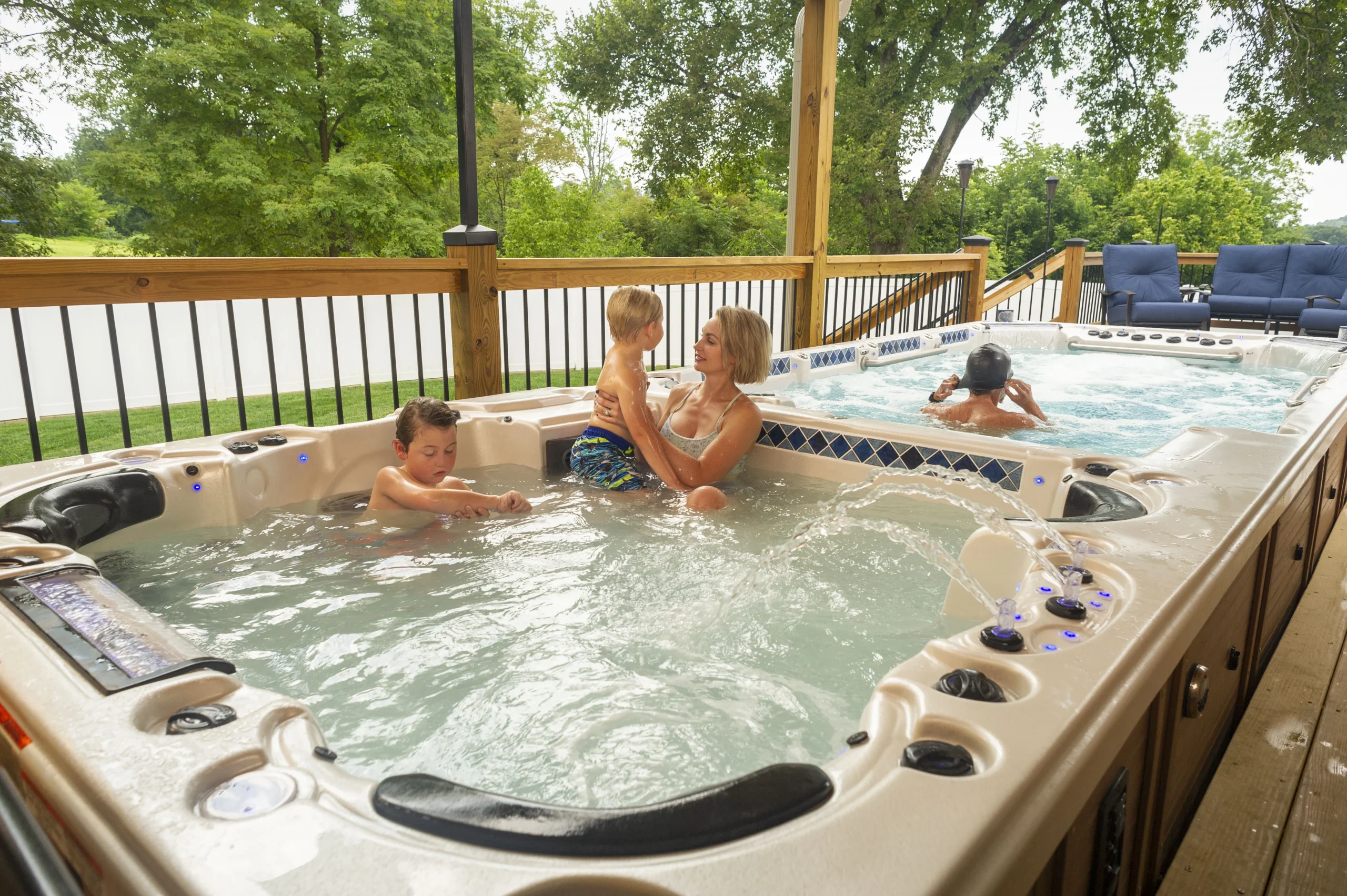
Dual-zone swim and therapy systems
-
Compact fitness-oriented models
-
Family-oriented leisure designs
-
Rehabilitation-focused configurations
-
Commercial or semi-commercial units
-
Cold-water or contrast-therapy variants
Comparative Overview
| Category | Primary Strength | Core Trade-Off | Typical Context |
|---|---|---|---|
| Single-zone | Strong current | Limited relaxation | Athletic training |
| Dual-zone | Functional separation | Higher complexity | Mixed-use households |
| Compact | Small footprint | Short swim length | Urban settings |
| Family-oriented | Social flexibility | Weaker current | Recreational use |
| Rehabilitation | Controlled environment | Narrow appeal | Clinical settings |
| Commercial | Durability | High operating cost | Gyms, hotels |
| Cold-water | Recovery benefits | Limited audience | Specialized wellness |
Decision logic should begin with dominant use case. Attempting to “balance everything” often results in mediocrity across all dimensions.
Detailed Real-World Scenarios
Scenario 1: Year-Round Fitness in Cold Climate
Heating efficiency and insulation dominate operating costs. Failure to account for energy demand leads to underuse.
Scenario 2: Urban Backyard with Noise Constraints
Pump acoustics become critical. High-performance currents may conflict with local regulations.
Scenario 3: Rehabilitation Facility
Precise current control and ingress accessibility matter more than maximum speed. Overpowered systems add risk rather than value.
Scenario 4: Multi-User Household
Competing preferences for temperature and jet intensity create friction. Governance, not hardware, determines satisfaction.
Scenario 5: Semi-Commercial Wellness Space
High user turnover accelerates wear. Maintenance scheduling becomes a business continuity issue.
Each scenario highlights second-order effects that rarely appear in initial planning discussions.
Planning, Cost, and Resource Dynamics
Costs are often framed as all-inclusive, but variability remains significant.
| Cost Component | Typical Range | Key Drivers |
|---|---|---|
| Unit acquisition | Moderate–High | Features, size |
| Site preparation | Low–Moderate | Access, base |
| Electrical upgrades | Variable | Load requirements |
| Energy use | Ongoing | Climate, insulation |
| Maintenance | Moderate | Usage intensity |
Opportunity cost appears when a swim spa displaces alternative uses of space or capital that might better align with user behavior.
Tools, Strategies, and Support Systems
-
Variable-speed propulsion controls
-
Thermal zoning systems
-
Automated water chemistry monitors
-
Sound-dampening enclosures
-
Preventive maintenance schedules
-
User access protocols
-
Manufacturer support programs
Each tool mitigates specific risks while introducing dependencies on calibration and oversight.
Risk Landscape and Failure Modes
Risks cluster around mechanical wear, energy inefficiency, user injury, and unmet expectations. Compounding failures often involve inadequate maintenance combined with high usage and delayed repairs.
Governance, Maintenance, and Long-Term Adaptation
Clear responsibility is essential. Unlike simple spas, swim spas demand structured oversight.
Layered checklist:
-
Daily: visual and control checks
-
Weekly: water balance review
-
Monthly: mechanical inspection
-
Annual: performance reassessment
Adaptation triggers include changes in user profile, energy pricing, or health requirements.
Measurement, Tracking, and Evaluation
Leading indicators include pump load trends and temperature stability. Lagging indicators include downtime and user complaints.
Documentation examples:
-
Usage logs
-
Energy consumption records
-
Maintenance reports
-
Incident summaries
Together, they support informed adjustment rather than reactive fixes.
Common Misconceptions and Oversimplifications
-
A swim spa replaces a full pool.
-
More jets always mean better performance.
-
Small size equals low operating cost.
-
All currents feel the same.
-
Installation simplicity means low risk.
-
One configuration fits all users.
-
Dual-zone systems eliminate compromise.
Each misconception persists because it reflects a partial truth detached from context.
Ethical, Practical, and Contextual Considerations
Energy consumption and accessibility deserve scrutiny. Swim spas can be efficient relative to pools, but inefficiency scales quickly with poor insulation or misuse. Accessibility design choices signal whether the system serves a narrow or inclusive audience.